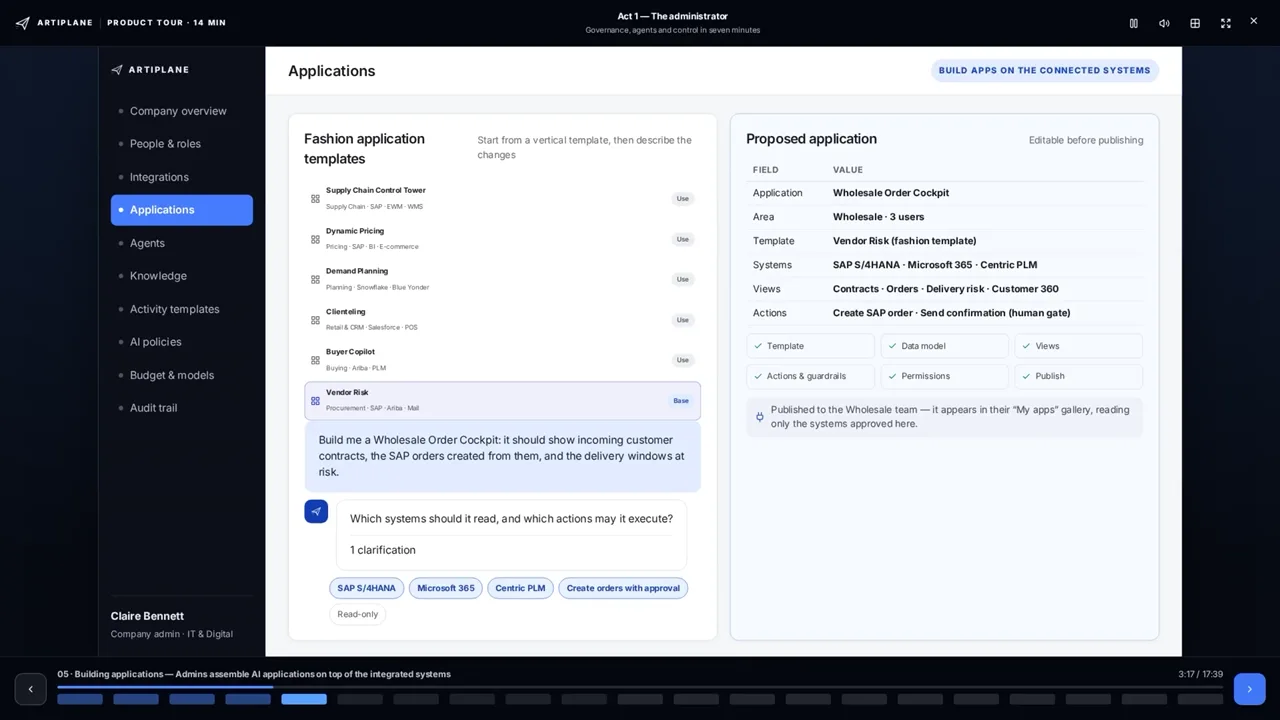
Enterprise fashion AI is not only about creating clothing imagery. It can support collection forecasts, allocation by size and colour, replenishment and informed clienteling. Reliable product attributes and sell-out data matter more than a standalone model.
Forecasting before the first sale
A new style has no item-level sales history. Teams can compare its category, fit, fabric, colour, price band, season and channel with analogous products, then revise the estimate once real sell-out arrives.
The decision is not only how much to buy: it is which sizes and colours to send to which store clusters, within production and transfer lead times.
Allocation with visible constraints
Combine forecast, available stock, display minimums, lead times and channel priorities. Merchandisers should be able to edit a proposed transfer and send the approved action back to the ERP.
Measure sell-through, stock-outs, residual inventory and margin by category and store. Good average forecast accuracy may still hide costly errors in popular sizes.
Clienteling requires context and consent
Store recommendations require consistent customer, stock and purchase information, with appropriate consent. Avoid suggesting unavailable items or inferring sensitive preferences without a lawful basis.
Generative design and imagery need a separate editorial review of asset rights and brand fit.
Where to start
- Unify PLM/PIM attributes, style-to-SKU hierarchy, sell-out and returns.
- Separate carry-over from newness; choose the forecast level the buyer can act on.
- Pilot size and colour curves by store cluster with allocation constraints.
- Compare recommendations with actual decisions and measure sell-through and availability.
What not to assume
- A new collection is inherently less predictable than continuing lines.
- Virtual try-on and image generation serve a different intent from operations planning.
Frequently asked questions
Can you forecast a product with no sales history?
Estimate from analogues and attributes, expose uncertainty, then update with early sell-out.
What does allocation need?
Style and SKU master data, store sales and returns, current stock, lead times, range constraints and size and colour curves.
Public source
These sources document ERP and digital projects, not AI outcomes claimed by this guide.